
Pruning
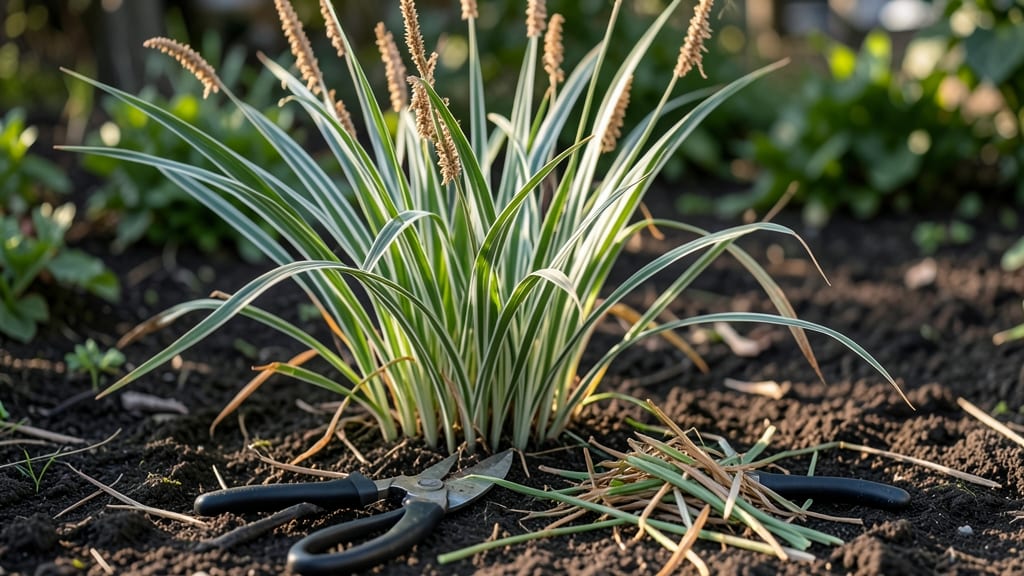
Cutting back ornamental grasses in spring is the secret to neat, healthy growth all season long. ✂️ I’ve learned the hard way—skipping this step means tangled clumps and weak stems by summer.
The best time is right after new shoots appear, usually in late winter or early spring when frost risk has passed in most regions.
Start by removing dead foliage with clean pruners or shears, cutting back to 2-3 inches above the ground for most types. For fountain grasses, leave 6-12 inches of stem to preserve their shape. The goal is to encourage fresh, upright growth while avoiding over-pruning, which stresses the plant.
You’ll notice a dramatic difference within weeks—plants stand taller, fill out faster, and resist pests better. The right timing also prevents seed heads from spreading unwanted seeds. For warm climates, wait until mid-spring when temperatures stabilize.
Clumping grasses like Miscanthus need aggressive cuts, while fountain grasses like Pennisetum respond well to a more gradual trim. Always sterilize tools between plants to avoid disease spread. This simple step transforms your yard from messy to showstopping by summer.
📚 In This Guide
- What you need
- Instructions
- Tips and common mistakes
- Wrapping up and next steps
What you need
- ● Pruning shears or hedge clippers – Choose bypass or anvil types (bypass is gentler for delicate grasses). A 10-12 inch blade works best for most varieties.
- ● Heavy-duty pruners or loppers – For thicker stems (e.g., Miscanthus or Panicum), opt for bypass loppers with 8-10 inch handles for leverage.
- ● Handsaws or pruning saws – For extremely thick stalks (e.g., Giant Reed), a curved-tooth saw prevents tearing.
- ● Garden gloves – Heavy-duty, cut-resistant gloves (e.g., Mechanix or Felco) to protect hands from sharp edges and sap.
- ● Wheelbarrow or large trash bags – To haul away 3-5 gallons of clippings (depending on grass size). A 50-gallon contractor bag is ideal.
- ● Knee pads or a small stool – For comfort when working with ground-hugging varieties (e.g., Carex or Calamagrostis).
- ○ String trimmer (weed whacker) – Optional but handy for fine grasses (e.g., Muhlenbergia) or hard-to-reach areas. Use a nylon or poly string (avoid metal for delicate blades).
- ● Disinfectant spray (e.g., 70% rubbing alcohol or bleach solution) – Wipe tools between cuts to prevent fungal spread.
- ● Marking flags or spray paint – To map out new growth zones if reshaping drastically.
- ● Dust mask – If your grasses release fine, powdery spores (common in Stipa or Pennisetum).
- ● Garden hose with nozzle – For a quick rinse-down of tools and to settle dust after trimming.
Step-by-step guide to cutting back ornamental grasses in spring
Revitalizing ornamental grasses starts with the right timing and technique—here's how to do it properly.
⏰ Step 1: Time Your Cut Based on Grass Type and Climate
Spring is the ideal time to cut back ornamental grasses, but the exact moment depends on your grass type and hardiness zone. For warm-season grasses like maiden grass (Miscanthus) and fountain grass (Pennisetum), wait until late winter or early spring when new growth emerges—typically 4-6 weeks before your last frost date. Cold-season grasses like feather reed grass (Calamagrostis) and switchgrass (Panicum) can be trimmed earlier, around mid-to-late winter.
Here's the thing—cutting too early can expose tender new shoots to frost damage, while waiting too long risks smothering fresh growth. Look for green shoots pushing through the old foliage as your signal. In warmer climates (zones 8-10), you might start as early as January, while in colder zones (3-6), March or April works best.
✂️ Step 2: Gather Tools and Assess the Plant Structure
You'll need sharp pruners or hedge shears for clean cuts, and a hand pruner or bolt cutters for thicker stems. Avoid dull tools—they crush stems and create jagged edges that invite disease. Examine each clump before cutting: healthy grasses have tight, upright growth with minimal dead centers, while neglected ones may show brown, brittle stems or hollowed-out centers.
Real talk: If a grass has died back completely (no green shoots after 6 weeks in spring), it's time to dig it up and replace it. Don't waste energy trying to revive a plant that's beyond saving—it's better to make room for something new. For healthy grasses, focus on removing only the dead or brown foliage, leaving the green growth intact.
🌱 Step 3: Trim Warm-Season Grasses to the Ground
Warm-season ornamental grasses need a hard cutback to encourage vigorous new growth. Using your pruners, cut the entire clump down to 1-2 inches above the soil line. This may seem drastic, but it prevents pests and diseases from overwintering in old foliage. For grasses with thick stems (like 3-6 feet tall varieties), work in sections to avoid bending or breaking the shears.
Here's where it gets fun—watch how the clump reveals its inner structure. Many grasses have attractive seed heads or persistent stems that add winter interest. If you want to preserve these, trim only the outer dead foliage, leaving the inner framework intact. Just be sure to remove any moldy or rotting material first—it's a surefire way to spread disease.
🌿 Step 4: Lightly Shape Cold-Season Grasses for Airflow
Cold-season grasses like feather reed grass benefit from a gentler trim. Instead of cutting to the ground, remove only the dead, brown foliage, leaving at least 6-12 inches of green growth. This preserves the grass's natural structure and protects it from late frosts. Use your shears to follow the natural shape of the plant, thinning out crowded areas to improve airflow and reduce humidity-related diseases.
You'll notice some grasses have arching or cascading habits—these should be trimmed to maintain their form. For example, Calamagrostis 'Karl Foerster' should be cut back to 4-6 inches tall to keep its upright, vase-like shape. Avoid cutting into the older, woody stems at the base, as these provide structural support and may take years to regenerate.
💧 Step 5: Clean Up Debris and Fertilize for New Growth
After trimming, remove all clippings and debris from the garden bed—this prevents pests and diseases from overwintering in old plant material. Rake the area lightly to aerate the soil and encourage root growth. Now's the time to apply a balanced, slow-release fertilizer (like a 10-10-10 or 20-20-20 formula) to fuel the grass's spring revival. Follow package instructions for application rates, but never exceed recommended amounts—over-fertilizing burns roots and encourages weak, floppy growth.
Water deeply after fertilizing to help nutrients penetrate the soil. You'll see new shoots emerge within 2-4 weeks, signaling that your grass is bouncing back. If growth is slow or sparse, consider testing your soil's pH—most ornamental grasses prefer slightly acidic to neutral soil (pH 6.0-7.0). Amend with sulfur or lime as needed to adjust levels.
Tips & tricks for revitalizing ornamental grasses in spring
A few strategic moves will transform your ornamental grasses from winter-worn to vibrant showstoppers.
Timing is Everything: In Step 1, when you spot those first green shoots breaking through the old growth, that's your cue—wait no longer than 4-6 weeks before your last frost date for warm-season grasses. I've seen gardeners rush this step and end up with frost-nipped new growth. For cold-season varieties, trim earlier (mid-to-late winter) but always before fresh shoots appear. Pro tip: Check your local frost date and mark your calendar—this simple preparation prevents the heartache of damaged spring growth.
Tool Precision Matters: Step 2 emphasizes sharp tools, but here's what nobody tells you—dull blades don't just make messy cuts, they crush stems and create perfect entry points for fungal infections. I've ruined perfectly healthy grasses by using old, blunt shears. Invest in a good pair of bypass pruners (they cut cleanly) and sharpen them annually. For thick stems (3-6 feet varieties), work in sections to avoid bending your tools. This isn't just about aesthetics—clean cuts heal faster and look more professional.
Grass-Specific Strategy: The instructions cover warm-season vs. cold-season approaches, but here's the nuance: For warm-season grasses in Step 3, that 1-2 inch cutback might expose attractive seed heads or persistent stems. If you want to preserve these architectural elements, trim only the outer dead foliage while leaving the inner framework intact. This creates a natural, textured look that many gardeners overlook. Just remember to remove any moldy material first—it's the fastest way to spread disease through your garden.
Fertilizer Timing Tip: In Step 5, when you apply that 10-10-10 or 20-20-20 fertilizer, here's what works best: Water the soil thoroughly first, then apply the fertilizer, and water again immediately after. This "water-fertilize-water" method helps nutrients penetrate the soil where roots can access them. I've seen many gardeners skip the post-fertilizer watering, which means half the nutrients just sit on the surface and get washed away—or worse, burned the roots. The 2-4 week window for new growth is your target, so don't rush this step.
Pro Tips for Cutting Back Ornamental Grasses In Spring
- A few strategic moves will transform your ornamental grasses from winter-worn to vibrant showstoppers.
- Timing is Everything: In Step 1, when you spot those first green shoots breaking through the old growth, that's your cue—wait no longer than 4-6 weeks before your last frost date for warm-season grasses.
- Tool Precision Matters: Step 2 emphasizes sharp tools, but here's what nobody tells you—dull blades don't just make messy cuts, they crush stems and create perfect entry points for fungal infections.
Frequently asked questions
Got questions about trimming your ornamental grasses? You’re not alone! Here are some of the most common concerns—and their straightforward answers—to help you tackle spring pruning with confidence.
When is the exact best time to cut back ornamental grasses in spring?
The ideal window is late winter to early spring, once new growth begins but before it pushes 6–12 inches tall. For cold climates, wait until after the last frost (usually February–April). Pro tip: If your grass is still brown, it’s not yet time—patience pays off!
Should I cut ornamental grasses all the way to the ground?
Not always! For clumping grasses (like Miscanthus), trim to 6–8 inches above the ground. For bamboo or fountain grasses, cut to 12–18 inches to preserve their shape. Never remove more than ⅓ of the plant in one go—this ensures a strong rebound. Over-trimming can stress the plant!
What if my ornamental grass looks dead—should I cut it back?
If the grass is completely brown and brittle, it’s likely dormant. Trim it back hard (to the ground or 2–3 inches tall) in early spring. If it’s soft or green at the base, it’s still alive—just give it time. Test it: Gently tug a stalk. If it resists, it’s alive!
Can I leave the old grass for winter interest, or should I clean it up?
It depends on your goals! For winter texture, leave it until late winter. For a neat spring look, remove it in early spring. If you choose to leave it, avoid cutting until new growth appears—old stems protect tender shoots from frost. Bonus: Dried grasses add charm to floral arrangements!
What’s the best tool for cutting back tall ornamental grasses?
Use sharp pruners, loppers, or a hedge trimmer for thick clumps. For very tall grasses (5+ feet), a bow saw or pruning saw works best. Always sterilize tools with rubbing alcohol to prevent disease spread. Time-saver: Wear gloves—grasses can be tough!
Wrapping up and next steps
Cutting back ornamental grasses in spring isn’t just about tidying up—it’s about giving your yard a fresh start and helping your plants thrive all season long. 🌱 With the right tools, timing, and technique, you’ll transform your garden into a lush, vibrant space that’s sure to impress.
Now that you’re armed with the know-how, grab your pruners and get ready to roll up your sleeves! Your next step? Pick a sunny day, follow your plan, and enjoy the satisfaction of a beautifully revitalized landscape.