
Diseases
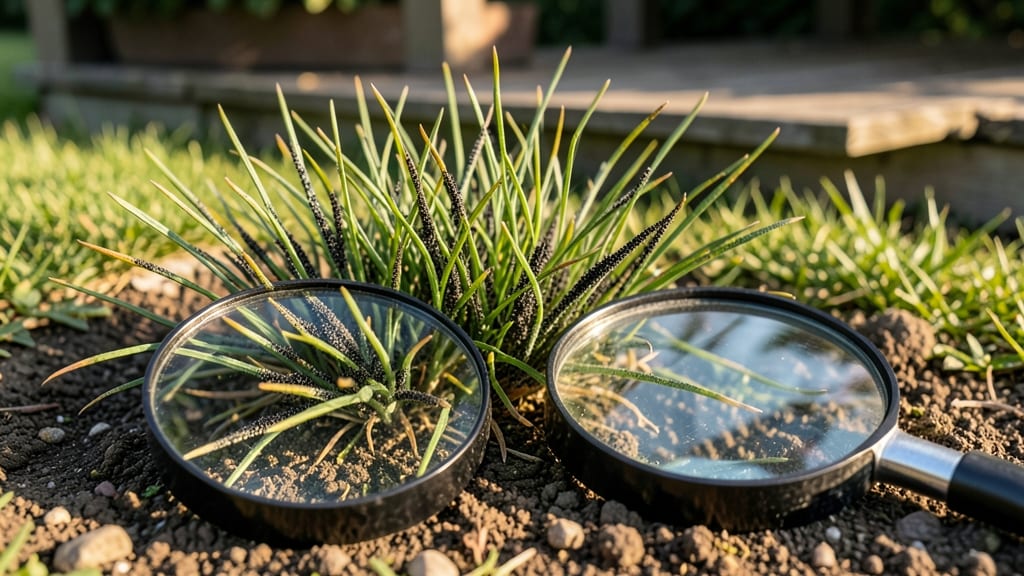
Black powdery fungus on grass turns your lawn into a dusty, weak mess—like someone sprinkled soot over your yard. 🌱 I’ve battled this stubborn blight, and the key is acting fast before it spreads.
The black dust you see? That’s spores stealing nutrients from your grass, leaving behind thin, patchy areas that won’t recover without intervention.
The problem starts with too much moisture—whether from overwatering, poor drainage, or humid summers. Fungal spores thrive in damp conditions, and once they take hold, they multiply quickly, especially on stressed grass.
The good news? You can stop it in its tracks with simple fixes like adjusting your mowing height, improving airflow, and applying targeted treatments.
Within 2-3 weeks of consistent care, you’ll see fresh green growth pushing through. The secret is combining cultural fixes—like raising your mower blade to 3-4 inches—with a copper-based fungicide applied every 4-6 weeks during peak humidity. No more black dust, just a thick, vibrant lawn that stays healthy year-round.
Works for all grass types, from cool-season fescue to warm-season Bermuda. The same steps prevent future outbreaks, so your lawn stays lush without constant chemical battles. Let’s get that grass back to its best!
Root Causes Of Fungal Overgrowth
That unsightly black powdery fungus creeping across your lawn isn’t just an eyesore—it’s a clear sign your grass is under stress. Understanding the why behind its appearance is the first step to stopping it in its tracks.
Let’s break down the key triggers, from environmental factors to grass health, so you can address the real issues.
Fungi thrive in damp, humid conditions—think of them as the lawn’s version of a rainforest creature. When grass stays wet for prolonged periods (especially 48+ hours), spores germinate and spread rapidly. Here’s how moisture fuels the problem:
- Poor drainage: Compacted soil or clay-heavy ground prevents water from draining, leaving grass blades soggy. Fix: Aerate annually to improve airflow and water absorption.
- Overwatering: Watering in the evening or at night delays drying, giving fungi a 24-hour head start. Fix: Water deeply but early (before 10 AM) to allow grass to dry by dusk.
- Morning dew: While natural, thick dew on dense grass (like St. Augustine or Bermuda) creates a fungal-friendly microclimate. Fix: Mow higher in humid climates to reduce leaf wetness.
Pro Tip: 🌡️ Use a hygrometer to monitor humidity—keep it below 75% during peak growing seasons to deter fungal growth.
A healthy lawn is naturally resistant to fungi, but stress weakens its armor. When grass struggles, it becomes an easy target. Common stress factors include:
| Stress Factor | Why It Matters | Quick Fix |
|---|---|---|
| Nutrient deficiencies (e.g., nitrogen, iron, potassium) | Weak roots and yellowing blades can’t fight off pathogens. | Apply a balanced fertilizer (16-4-8) in early spring/fall. |
| Thatch buildup (layer of dead grass > ½ inch thick) | Traps moisture and blocks sunlight, creating a fungal paradise. | Dethatch or overseed to reduce thickness. |
| Improper mowing (cutting too short or unevenly) | Exposes tender new growth to spores and reduces photosynthesis. | Follow the 1/3 rule: Never remove more than ⅓ of the blade height. |
Pro Tip: ✨ Conduct a soil test every 2–3 years to identify deficiencies before they invite fungi.
Fungi don’t just appear out of nowhere—they hitchhike on wind, tools, shoes, and even pets. Here’s how spores colonize your lawn:
- Wind and rain: Spores travel miles, landing on wet grass where they latch on. Fix: Rake up infected leaves/debris immediately after storms.
- Contaminated equipment: Mowers, rakes, and shoes can transfer spores from one area to another. Fix: Clean tools with a 10% bleach solution between uses.
- Adjacent infected plants: Overgrown weeds or nearby trees (like oak or pine) can host fungal spores. Fix: Prune dead branches and remove diseased plants.
Warning: 🚨 Don’t compost infected grass clippings—heat kills spores, but the risk of reinfection is high.
By tackling these root causes—moisture control, grass vitality, and spore prevention—you’ll starve the fungus of its favorite conditions. Next up: How to treat it fast before it spreads further.
How to Fix Fungal Blight Fast
Seeing that black powdery fungus creeping across your lawn can feel like a nightmare, but don’t panic—you’ve got this! The key is acting quickly with the right mix of remedies, prevention, and lawn care tweaks.
Below, we break down the most effective fixes based on the root causes we covered earlier, plus tips to keep your grass thriving long-term. Let’s get your lawn back to its lush best!
Before treating the fungus, contain the spread by removing the worst-hit patches. This stops spores from multiplying and infecting healthy grass.
🍳 How to Do It:
- Cut or rake out severely infected grass (where black powder is thick or the grass is dying). Dispose of it in a sealed bag or burn it (if local laws allow).
- Avoid composting—fungus spores can survive and reinfect your yard later.
- Clean tools with a 10% bleach solution (1 part bleach to 9 parts water) or rubbing alcohol to kill lingering spores.
💡 Pro Tip: If the fungus is only on a few blades, snip them at the base with sterilized scissors instead of pulling entire clumps to minimize damage.
For stubborn or widespread infections, a fungicide is your best bet. But not all products work the same—choose one with active ingredients like propiconazole, myclobutanil, or chlorothalonil, which target powdery mildew and similar fungi.
🥘 How to Apply:
- Water the lawn first (lightly) to help the fungicide absorb into the grass blades.
- Follow label instructions for dosage—overapplying won’t speed up results and can harm the environment.
- Reapply every 7–14 days if the fungus persists (check the product’s recommended schedule).
- Avoid fungicides with copper if your soil is already copper-rich (test with a soil kit if unsure).
✨ Eco-Friendly Swap: For small areas, try a baking soda spray (1 tbsp baking soda + 1 gallon water + a drop of dish soap). Spray lightly on a cloudy day—it’s mild but can help in early stages.
Fungus thrives when grass is stressed. Fix the underlying issues to prevent recurrence:
🔪 Quick Fixes:
| Problem | Solution |
|---|---|
| Poor drainage | Core aerate your lawn in spring/fall to improve airflow and water absorption. Add compost or sand to heavy clay soil. |
| Overwatering | Water deeply 2–3 times per week (early morning) instead of daily light sprinkles. Let the top inch of soil dry between waterings. |
| Thin or weak grass | Overseed bare spots with disease-resistant grass varieties (e.g., tall fescue or Kentucky bluegrass). Fertilize lightly with a low-nitrogen, high-phosphorus blend to encourage roots. |
| Excess shade | Trim overhanging trees/branches to let sunlight reach the lawn. If shade is unavoidable, choose shade-tolerant grasses like fine fescue. |
⏰ Seasonal Prevention:
- Spring: Test soil pH (aim for 6.0–7.0) and adjust with lime or sulfur if needed. Apply a pre-emergent fungicide in early spring for high-risk areas.
- Fall: Rake up thatch (layer of dead grass) to reduce moisture buildup. Apply a slow-release nitrogen fertilizer to strengthen grass before winter.
- Year-Round: Mow high (3–4 inches) to shade soil and reduce fungal spores. Sharpen mower blades to avoid tearing grass, which invites disease.
🎯 Golden Rule: If you’ve had fungus before, treat preventatively in early spring—it’s easier than playing catch-up later!
With these steps, your lawn should bounce back in 2–4 weeks. Stay consistent with care, and that black powdery fungus won’t stand a chance!
For severe cases, consider consulting a local lawn care pro—they can diagnose if it’s a deeper issue (like Rhizoctonia or Dollar Spot) and tailor a plan.
Frequently asked questions
Is black powdery fungus the same as dollar spot or rust disease?
No, they’re different fungal issues with distinct symptoms. Black powdery fungus appears as a dark, sooty dust on grass blades, while dollar spot creates straw-colored patches with slimy centers. Rust shows as orange-brown pustules on leaf surfaces. For accurate ID, check the color and texture—black powdery fungus feels gritty when rubbed between fingers.
Will my grass recover completely after treating black powdery fungus?
Yes, but recovery depends on how early you act. Healthy grass typically regrows within 2-4 weeks of removing infected patches and applying fungicide. Severely damaged areas may need overseeding with disease-resistant grass varieties (like tall fescue) to fill bare spots. Avoid heavy foot traffic until new growth appears.
Can I use vinegar or hydrogen peroxide to kill black powdery fungus?
Vinegar (undiluted) will burn your grass, and while hydrogen peroxide (3% solution) can help in small areas, it’s not as effective as dedicated fungicides. For best results, use a copper-based or myclobutanil fungicide—these target fungal spores directly without harming your lawn. Always spot-test any DIY solution first.
How do I know if my lawn’s drainage is the real problem?
Test it with the sponge test: Press a white sponge into the soil—if water pools on top after 10 minutes, drainage is poor. Other signs include puddles after rain or mushrooms growing in damp spots. Fix it by aerating (spring/fall) and adding organic matter like compost to improve soil structure.