
Lawn
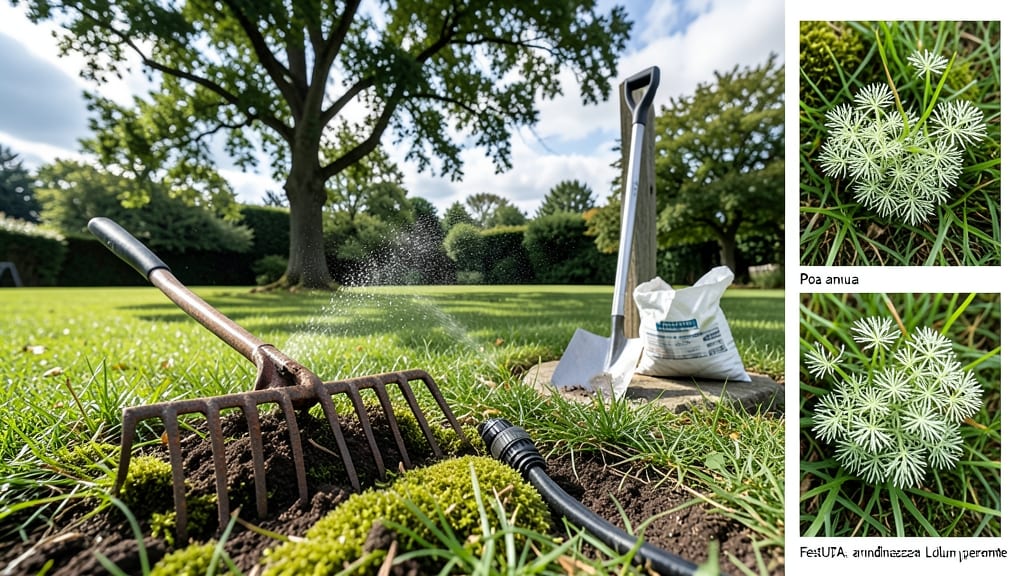
Your lawn’s moss problem isn’t just an eyesore—it’s a sign your soil is whispering for help. 🌱 The moment you see those soft green patches crowding out grass, you know your lawn is telling you it’s too shady, too wet, or too acidic.
I’ve spent years watching moss take over lawns in damp, shaded spots, and the good news? You can outsmart it with the right approach.
The real culprit is often compacted soil or poor drainage, which moss loves because it thrives in damp, low-light conditions. Grass, on the other hand, needs sunlight and air to breathe.
When moss wins, it’s because your lawn isn’t getting what it needs—whether that’s sunlight, proper aeration, or the right soil pH. The fix starts with understanding your lawn’s specific struggles.
You’ll learn how to break up thatch, raise the pH, and overseed with shade-tolerant grass—all without tearing up your yard. Within a season, you’ll see moss retreat and grass reclaim its space, leaving you with a lawn that’s lush, green, and resilient.
The key is acting before moss gets comfortable.
This isn’t just about looks—it’s about giving your lawn the care it deserves. Whether you’re dealing with a shady yard, heavy clay soil, or just tired of moss battles, these fixes will help you take back control. Let’s get your lawn back to its best.
The hidden triggers behind lawn moss
Moss in your lawn isn’t just an unsightly nuisance—it’s often a symptom of deeper issues with your soil, sunlight, or maintenance habits. Unlike grass, which thrives in specific conditions, moss is a pioneer plant that capitalizes on gaps in care.
Understanding why it takes over is the first step to reclaiming a lush, green lawn. Let’s dig into the science behind those spongy green patches.
Moss loves water—too much of it. Unlike grass, which needs consistent but not soggy soil, moss thrives in wet, damp conditions. Here’s why:
- Waterlogged soil: When your lawn stays soggy for days (or weeks), oxygen is squeezed out of the soil. Grass roots suffocate, while moss spores germinate and spread because they don’t need deep roots to survive.
- Shallow root zones: Compacted or clay-heavy soil prevents water from draining properly. Moss fills the air pockets left behind, creating a self-perpetuating cycle.
- Frequent rain or irrigation: Overwatering—whether from heavy rainfall, leaky sprinklers, or poor grading—keeps the top layer of soil perpetually moist, giving moss the perfect breeding ground.
Actionable fix: Test your soil’s drainage by digging a 6-inch hole and filling it with water. If it doesn’t drain within 4–6 hours, your lawn may need soil amendments or regrading.
Grass is a sun-worshipper, while moss is the shade-loving underdog. When trees, buildings, or hills block sunlight, moss wins by default. Here’s the science:
- Photosynthesis struggle: Grass needs 4–6 hours of direct sunlight daily to produce enough energy for growth. In shady spots, grass weakens and thins out, leaving bare patches for moss to invade.
- Moss thrives in low light: Moss can photosynthesize in as little as 1–2 hours of indirect light, making it the only green thing surviving in dim conditions.
- Competition for nutrients: Shady grass roots grow slowly, so they can’t outcompete moss for nitrogen and phosphorus in the soil.
Actionable fix: If shade is unavoidable, choose shade-tolerant grass varieties like fine fescue or creeping red fescue. For extreme shade, consider moss-friendly ground covers or mulching.
Moss isn’t picky about soil pH—it loves acidic conditions, while most lawn grasses prefer neutral to slightly alkaline soil (pH 6.0–7.5). Here’s how pH plays a role:
- Grass struggles in acidity: When soil pH drops below 5.5, essential nutrients like phosphorus, calcium, and magnesium become locked up, starving grass roots.
- Moss thrives in acidity: Moss absorbs nutrients directly from organic matter and doesn’t need a balanced pH, making it the dominant plant in acidic soils.
- Decomposition boosts acidity: Fallen leaves, pine needles, or untreated wood chips break down into acidic litter, further lowering pH over time.
Actionable fix: Test your soil’s pH with a home test kit. If it’s below 6.0, apply lime (calcium carbonate) to raise the pH gradually. Avoid overdoing it—aim for 6.5–7.0 for most grasses.
Moss doesn’t just invade—it replaces grass when the turf is weak. Thin or patchy lawns create the perfect entry point for moss. Here’s why it happens:
- Weak grass roots: Poor soil, drought, or disease stress grass plants, causing them to brown out or die, leaving bare soil for moss to colonize.
- Compaction and foot traffic: Heavy use or machinery compresses soil, reducing oxygen and nutrients to grass roots while moss thrives in the compacted layer.
- Poor seeding or overseeding: If you’ve had bare spots for over a year, moss may have already established a root-like network (rhizoids) that’s hard to remove.
Actionable fix: Overseed thin areas in early fall (when conditions are ideal for grass growth) and aerate compacted soil to revive roots. Avoid walking on wet grass to prevent further damage.
Leaves, twigs, and thatch aren’t just eyesores—they’re moss magnets. Here’s how they create the perfect moss habitat:
- Thatch buildup: A thatch layer thicker than ½ inch blocks water, air, and nutrients from reaching grass roots, while moss grows right on top of the thatch.
- Leaf litter: Fallen leaves smother grass and create a moist, shaded microclimate where moss spores germinate rapidly.
- Neglected mowing: Tall grass shades itself, reducing sunlight to the base where moss takes hold. Plus, clippings left uncollected add organic matter that feeds moss.
Actionable fix: Rake or blow away leaves promptly, dethatch in early spring, and mow regularly (but never remove more than ⅓ of the blade height at once).
How to Fix Your Mossy Lawn
Now that you know why moss is taking over your lawn, it’s time to reclaim your green space! The good news? With the right approach, you can eliminate moss and prevent it from coming back.
Below are practical, step-by-step solutions tailored to the most common causes—plus tips to keep moss at bay for good.
---
Moss thrives in shady, damp areas where grass struggles. If your lawn is mostly shade, focus on improving soil health and encouraging grass growth in those spots.
#### Step 1: Aerate to Break Up Compacted Soil 🔥 - Why? Moss loves tight, waterlogged soil.
Aeration opens up the ground, allowing air, water, and nutrients to reach grass roots. - How? - Rent a core aerator (or hire a lawn service) and run it over the mossy areas in late spring or early fall. - Remove the soil plugs—they’ll break down naturally, adding organic matter back into the soil.
#### Step 2: Overseed with Shade-Tolerant Grass 🌱 - Why? Not all grass can handle shade.
Moss will always win if you’re growing sun-loving varieties like Bermuda or Kentucky Bluegrass. - How? - Choose shade-tolerant grass seeds like Fine Fescue, Creeping Red Fescue, or St. Augustine. - Spread seed in early fall (ideal germination temps) or late spring. - Keep soil moist but not soggy for 4-6 weeks while new grass establishes.
#### Step 3: Improve Drainage with Sand or Compost 🏗️ - Why? Moss needs constant moisture.
If water pools in your lawn, fix it before seeding. - How? - For heavy clay soil: Mix in coarse sand (like topsoil sand) to improve drainage. - For nutrient-poor soil: Work in 2-3 inches of compost to feed grass roots and outcompete moss. - Top-dress with a thin layer of peat moss-free compost after aerating.
#### Step 4: Thin Out Moss (Don’t Rake It All!) 🪓 - Why? Raking moss aggressively can damage grass roots.
Instead, smother and starve it. - How? - Wait for a dry day, then use a bow rake to gently scrape moss into piles. - Remove the piles (compost them or dispose of them). - Never rake when soil is wet—this spreads moss spores!
--- Moss loves acidic soil (pH below 6.0), while most lawn grasses prefer slightly acidic to neutral (6.0–7.0).
#### Step 1: Test Your Soil’s pH 📊 - Why? A simple soil test kit (or lab test) tells you exactly what’s missing. - How? - Buy a DIY test kit ($10–$20) or send a sample to your local cooperative extension office. - Aim for a pH of 6.0–7.0 for most grasses.
#### Step 2: Raise pH with Lime 🧈 - Why? Lime neutralizes acidity, creating a hostile environment for moss. - How? - Apply pelletized lime (not quicklime) in early fall (best absorption) or spring. - Follow package rates—too much lime can harm grass. - Water lightly after application.
#### Step 3: Fertilize to Outcompete Moss 🌿 - Why? Moss doesn’t need much—grass does.
A balanced fertilizer (like 16-4-8) gives grass the edge. - How? - Apply slow-release fertilizer in early spring and fall. - Use a spreader for even coverage. - Avoid high-nitrogen fertilizers in summer—they can burn grass in heat.
--- Moss spreads fast in soggy lawns. If your grass is drowning, drainage and watering habits need an overhaul.
#### Step 1: Adjust Your Watering Schedule 💧 - Why? Moss thrives in constant moisture.
Grass needs deep, infrequent watering. - How? - Water early morning (5–9 AM) to reduce evaporation and fungal risks. - 1–1.5 inches per week (including rain) is enough for most lawns. - Avoid daily light watering—this keeps moss happy!
#### Step 2: Improve Drainage with Sand or Swales 🏞️ - Why? If water pools, moss will move in.
Fix the root cause first. - How? - For low spots: Dig a swale (a shallow trench) to redirect water. - For clay soil: Mix in sand or perlite to improve drainage. - For severe waterlogging: Consider French drains or soil amendments like gypsum.
#### Step 3: Let the Lawn Dry Out Between Waterings ☀️ - Why? Moss needs consistent dampness.
Let grass go dormant in dry spells—it’s more resilient than you think! - How? - If rain is forecasted, skip watering for a few days. - Brown grass recovers when water returns—moss won’t.
--- If your grass is sparse, moss fills the gaps like weeds. Strengthen your lawn so it crowds out moss naturally.
#### Step 1: Mow High (3–4 Inches) ✂️ - Why? Taller grass shades out moss and develops deeper roots. - How? - Set your mower to 3–4 inches (higher for shade). - Never remove more than 1/3 of the blade in one mowing.
#### Step 2: Feed Grass with Nitrogen (But Not Too Much!) 💪 - Why? Grass needs nitrogen to grow thick, but too much can burn it. - How? - Use a slow-release fertilizer (like Milorganite) in spring and fall. - Avoid fast-release fertilizers (like ammonium sulfate)—they can harm grass.
#### Step 3: Dethatch if Needed 🪓 - Why? A thick thatch layer (½ inch or more) smothers grass roots and invites moss. - How? - Rent a dethatching rake or vertical mower in late spring or early fall. - Only dethatch if the layer is over ½ inch thick.
--- Once you’ve kicked moss out, don’t let it sneak back in with these long-term strategies:
✅ 💡 Mow regularly – Keeps grass thick and competitive. ✅ 🌡️ Test soil pH yearly – Reapply lime if pH drops below 6.0. ✅ 🌱 Overseed bare spots – Fill gaps before moss moves in. ✅ 💧 Water deeply but less often – Moss hates dry spells. ✅ 🌿 Aerate every 1–2 years – Prevents soil compaction. ✅ 🪓 Remove moss clumps immediately – Don’t let them spread spores.
--- ❌ Don’t use vinegar or bleach – Kills grass too! ❌ Don’t rake moss into soil – Spreads spores. ❌ Don’t fertilize in summer – Can burn grass in heat. ❌ Don’t ignore drainage issues – Fix water pooling first.
--- Final Thought: 🎯 Moss isn’t the enemy—it’s just taking advantage of weak grass and poor conditions. By improving soil, adjusting watering, and growing thicker grass, you’ll create a lawn that naturally resists moss for years.
Start with one or two fixes this season, and watch your lawn bounce back! 🌿✨
Frequently asked questions
Why does moss grow in patches instead of covering my whole lawn?
Moss thrives in specific conditions like shade, dampness, and acidic soil, while grass needs sunlight and proper drainage. When you see patches, it’s usually because those spots have more shade or poorer soil quality than the rest of your lawn. Moss spreads easily in these microclimates while grass struggles.
Can I just rake moss off and expect it to stay gone?
Raking helps, but it’s only part of the solution. Simply removing moss doesn’t fix the underlying issues like compacted soil or poor drainage. For long-term results, you’ll need to aerate, overseed with shade-tolerant grass, and improve soil conditions—otherwise, moss will likely return within weeks.
Is moss bad for my lawn in any way?
Moss itself isn’t harmful, but it’s a sign of underlying lawn problems like poor soil health or drainage issues. While it doesn’t harm grass directly, its presence means your lawn isn’t getting the care it needs. Left unchecked, moss can crowd out grass roots, making your lawn thinner and less resilient over time.
How long does it take to eliminate moss from a lawn?
With the right approach, you can see noticeable improvement in 4-6 weeks, but complete elimination may take 1-2 seasons. The key is consistency—aerating, overseeding, adjusting watering habits, and improving soil pH all work together. Moss removal is a process, not an overnight fix.
Will lime really kill moss in my lawn?
Lime won’t kill moss directly, but it creates an unfavorable environment by raising soil pH to levels that grass prefers (6.0-7.0). Moss thrives in acidic conditions, so adjusting pH helps grass outcompete it naturally. Combine lime with overseeding and proper watering for best results—this approach starves moss out over time.