
Lawn
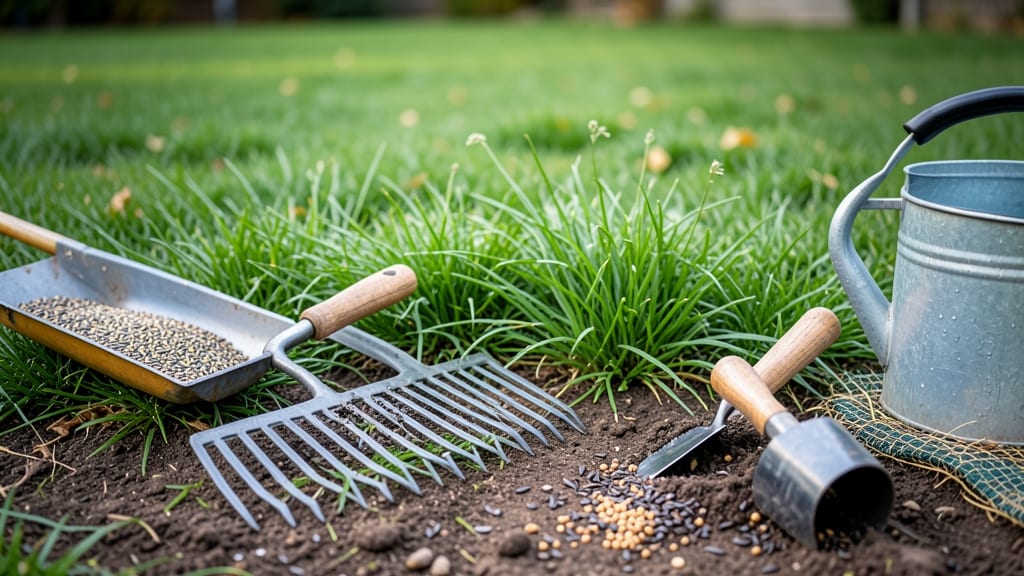
Seeding lawns in fall gives you a head start on next year's lush green carpet—when the soil is warm, weeds are dormant, and rain does most of the watering for you. 🌱 I learned this the hard way after seeding in late spring and watching my grass struggle through summer heat.
Fall creates ideal conditions for cool-season grasses like fescue and rye to establish deep roots before winter sets in.
Timing is everything: aim for 4-6 weeks before your first frost, usually between late August and early October. This window balances warm soil for germination with cool air that reduces stress on new seedlings.
You'll need a rake, seed spreader, compost or starter fertilizer, and a light layer of straw to protect the seeds—simple tools that make the process foolproof for beginners.
Start by removing debris and raking the soil to a rough texture—think "sandy beach" not "smooth sidewalk." Spread seed evenly, then lightly cover with soil or compost (no deeper than ¼ inch). Water gently but thoroughly, keeping the soil moist like a wrung-out sponge until germination.
Within 2-3 weeks, you'll see those first green blades pushing through, signaling a lawn that'll outlast spring seeding every time.
Regional tweaks matter: Northern gardeners can seed as late as November, while Southern zones should finish by mid-October. The key is avoiding drought or freezing before roots establish. With proper care, your fall-seeded lawn will be the envy of the neighborhood by spring—thicker, greener, and weed-resistant from the start.
📚 In This Guide
- What you need
- Instructions
- Tips and common mistakes
- Wrapping up and next steps
What you need
- ● Seed: Cool-season grass seed (e.g., Tall Fescue, Kentucky Bluegrass, or Perennial Ryegrass) – 5–10 lbs per 1,000 sq ft (check seed bag for exact coverage rates).
- ● Soil Prep Tools: Lawn rake (bow or stiff-bristle) – to loosen soil and remove debris.
- ○ Garden rake (optional but helpful) – for smoothing rough patches.
- ● Seeding Tools: Broadcast spreader (for even distribution) OR a drop spreader (for precision).
- ● Hand seeder (for small areas or tricky spots).
- ● Fertilizer: Starter fertilizer (high in phosphorus, e.g., 10-20-10 or 5-10-5 ratio) – ½ lb per 100 sq ft.
- ● Watering Supplies: Hose with adjustable nozzle OR a sprinkler (light, frequent watering is key!).
- ○ Optional (But Helpful!) Extras: Soil test kit – to check pH and nutrient levels (ideal pH: 6.0–7.0).
- ● Compost or peat moss – to improve soil texture in thin or bare spots.
- ● Lawn roller (lightweight) – for firming seed into soil (only after seeding!).
- ● Weed blocker or pre-emergent herbicide (apply after seeding, per label instructions).
- ● ✅ Perfect timing: Seed between mid-September to early November (before frost but after summer heat).
- ● ✅ Clear the lawn: Remove weeds, rocks, and debris for optimal seed contact.
- ● ✅ Check the forecast: Aim for 4–6 weeks of dry weather post-seeding (no heavy rain or drought).
Step-by-Step instructions for seeding lawns in fall
Fall is the perfect time to revive your lawn—here’s how to do it simply and effectively.
🌱 Step 1: Prepare the Soil for Seeding
Start by mowing your lawn down to about 1.5 inches—this removes old growth and gives seeds sunlight to germinate. I like to use a rake to loosen the top ¼ inch of soil, breaking up any compacted areas where roots can’t push through. Think of it like fluffing a pillow for the seeds to settle into.
If your lawn has bare spots or thin areas, lightly scratch the soil with a garden rake to create a rough texture. This helps seeds make contact with the soil and improves moisture absorption. Avoid tilling too deeply—just enough to create a seed-friendly surface. The goal is to mimic the natural conditions where grass thrives.
💧 Step 2: Spread Seed Evenly and Lightly
Use a broadcast spreader to distribute the seed evenly across the lawn. I like to walk in a crisscross pattern to ensure no spots are missed. For small areas, you can hand-spread the seed by gently tossing it over the prepared soil. The key here is to avoid clumping—seeds need space to grow without competing for nutrients.
Lightly rake the area again to press the seeds into the soil, but don’t bury them too deeply. Most cool-season grasses only need to be covered by a thin layer of soil—about ¼ inch max. This ensures they stay in place while still getting the light they need to sprout. If you’re seeding over an existing lawn, a light layer of straw mulch (about ¼ inch thick) can help retain moisture and protect the seeds from birds.
☀️ Step 3: Water and Maintain for Germination
Water the seeded area immediately after spreading, keeping the soil consistently moist but not soggy. I set a gentle sprinkler to run for 10-15 minutes daily until the seeds germinate—usually within 7-21 days, depending on the grass type and weather. You’ll know it’s working when you see tiny green shoots pushing through the soil.
Once the seedlings reach about 2 inches tall, you can gradually reduce watering to 1 inch per week, letting the roots grow deeper. Avoid heavy foot traffic during this time—new grass is delicate and needs time to establish strong roots. In about 4-6 weeks, your lawn should look lush and full, ready to handle regular mowing and care.
Tips & tricks for perfect fall lawn seeding
Here's what nobody tells you about getting that perfect fall lawn—these little details make all the difference.
Soil Prep Secret: After mowing to 1.5 inches in Step 1, take a moment to check for hidden rocks or debris before raking. I learned this the hard way—those sneaky stones can prevent seeds from making proper contact with the soil. A quick sweep with a leaf blower or hand-picking works wonders. The goal is to create a smooth, level surface where seeds can settle evenly.
Seed Distribution Technique: When using a broadcast spreader in Step 2, walk in overlapping passes to avoid thin or thick spots. I like to divide the lawn into sections and mark them with flags so I don't miss any areas. For small patches, try the "hand-toss" method—just be gentle to avoid clumping. Remember, seeds need space to grow, not compete for nutrients.
Watering Wisdom: Those 10-15 minutes of daily watering in Step 3 are crucial, but timing matters too. Water in the early morning so the soil stays moist without encouraging fungal growth. I set my sprinkler for 10 minutes first thing, then check for consistent moisture—it should feel like a damp sponge, not a muddy mess. Adjust based on your grass type; some varieties need slightly more frequent watering.
Germination Check: After 7-21 days, look for those first green shoots as your success indicator. If you're not seeing sprouts after 21 days, gently rake a small area to check if seeds were properly covered. Too much mulch or uneven soil can prevent germination. Patience is key—cool-season grasses grow slower than warm-season varieties, but they'll reward you with a lush lawn that thrives in fall's cooler temperatures.
Pro Tips for Seeding Lawns In Fall
- Here's what nobody tells you about getting that perfect fall lawn—these little details make all the difference.
- Soil Prep Secret: After mowing to 1.5 inches in Step 1, take a moment to check for hidden rocks or debris before raki...
- Seed Distribution Technique: When using a broadcast spreader in Step 2, walk in overlapping passes to avoid thin or t...
Frequently asked questions
Got questions about seeding your lawn in the fall? You’re not alone! Here are answers to the most common concerns—so you can tackle your project with confidence.
When is the exact best time to seed in fall?
The ideal window is 4-6 weeks before your first hard frost—typically late August to mid-October in most U.S. regions. This gives grass seeds time to germinate and establish roots before winter dormancy. Check your local frost date for precision!
How long does it take for grass to grow after seeding?
Expect 7–21 days for germination, depending on grass type (cool-season grasses like fescue or ryegrass sprout faster than warm-season). Full root establishment takes 4–6 weeks, so avoid heavy foot traffic until then. Patience pays off for a lush lawn!
Do I need to water every day after seeding?
Yes! Keep soil consistently moist (not soggy) for the first 2–3 weeks. Water lightly 2x daily (morning/evening) for 10–15 minutes. Once sprouts reach 2 inches, taper to 1 inch per week. A sprinkler with gentle misting works best.
Will birds or critters eat my grass seeds?
Absolutely—birds, squirrels, and even raccoons love fresh seeds! Cover seeded areas with straw or a thin layer of soil to protect them. For stubborn pests, try a lightweight netting until germination. Don’t let them steal your green dreams!
Can I overseed an existing lawn, or do I need to reseed bare spots?
Both work! For overseeding, mow low (1–2 inches), rake lightly, and spread seeds evenly. For bare patches, remove debris, loosen soil, and top-dress with compost. Overseeding thickens grass, while patching targets specific weak areas. Choose based on your lawn’s needs!
Wrapping up and next steps
Fall is the perfect time to give your lawn a fresh start—cool-season grasses thrive when seeded in these crisp months, setting the stage for a lush, green spring. By following these three simple steps, you’ll save time, money, and frustration while creating a stronger, healthier lawn. 🌱
Now that you’re equipped with the know-how, roll up your sleeves and get started! Your future self (and your neighbors) will thank you. For extra peace of mind, consider testing your soil or consulting a local nursery for tailored advice before diving in.
Pro tip: Mark your calendar for next fall—consistency is key to long-term lawn success! 🎯