
Lawn
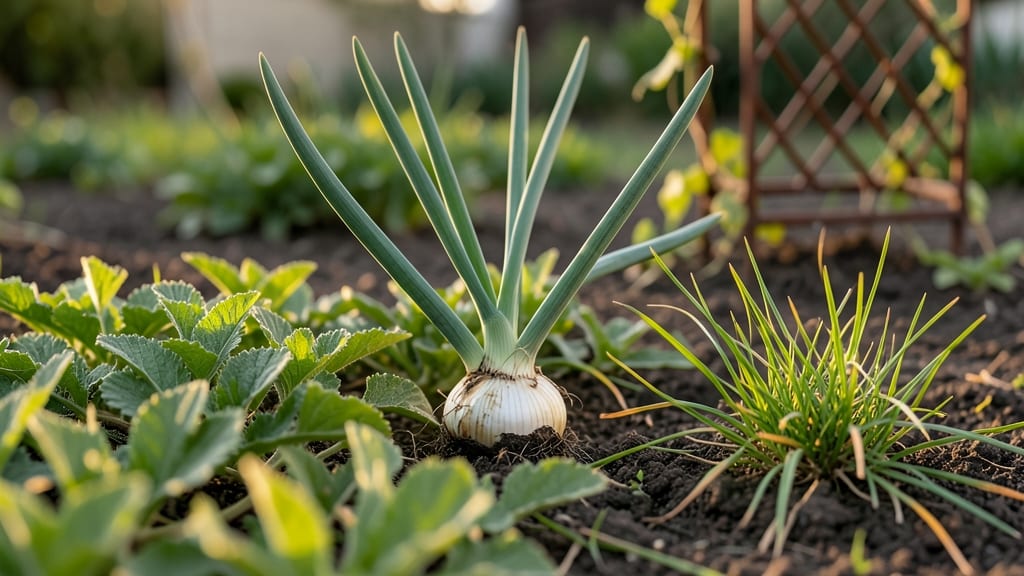
Onion grass is invasive in gardens and lawns because it spreads rapidly through underground rhizomes and self-seeding, quickly forming dense patches that choke out other plants.
This aggressive spread happens because onion grass produces both underground runners and airborne seeds, making it nearly impossible to eliminate without consistent effort. 🌱 Once established, it can dominate sunny areas with well-drained soil, often appearing in lawns and garden beds where it wasn't originally planted.
The key to controlling it lies in understanding its growth habits and acting quickly before it takes over.
Many gardeners mistakenly assume pulling the visible blades will solve the problem, but the real battle happens below ground where those stubborn rhizomes persist. Without proper removal techniques, you'll likely find new shoots popping up within weeks.
That's why I recommend combining manual extraction with targeted herbicide applications during its active growing season.
💡 In This Article
- How Onion Grass Spreads and Invades Landscapes
- Effective Removal Methods for Onion Grass Control
How onion grass spreads and invades landscapes
Onion grass spreads like a relentless underground network because of its specialized rhizome system. These horizontal stems grow just below the soil surface, producing new shoots every 4-6 inches along their length. Each node on the rhizome can sprout a new plant, creating a dense mat that smothers nearby vegetation.
The rhizomes themselves can extend up to 3 feet in ideal conditions, making spot treatment nearly impossible without removing the entire network.
The real invasion begins when these rhizomes fragment during removal attempts. Even small pieces left in the soil can regenerate into full plants.
This is why pulling individual blades rarely works—you're often just stimulating more growth from the remaining underground system. 🌱 What makes it worse is that onion grass also reproduces through seeds, which can remain viable in the soil for up to 5 years, ensuring a constant supply of new invaders.
This plant thrives in sunny areas with well-drained soil, which is why it often takes over lawns, garden beds, and even cracks in pavement. The ideal conditions for its spread include 6-8 hours of direct sunlight daily and soil with a pH between 6.0-7.5.
Once established, it can outcompete desirable plants by stealing nutrients and water through its extensive root system, which can reach depths of 12-18 inches.
What most people don't realize is how quickly onion grass forms these dense patches. A single plant can produce 50-100 new shoots annually through rhizome growth alone.
The combination of underground spread and airborne seeds means that even a small infestation can become a full-blown invasion within 1-2 growing seasons if left unchecked. This is why early detection and aggressive removal are critical.
Visually, you'll notice onion grass forming tight clusters with long, flat blades that resemble grass but with a slightly thicker texture. The key identifying feature is the bulb-like base where the blades emerge from the soil—this is where the rhizomes connect.
Unlike true grasses, onion grass doesn't have the same fibrous root structure, which is why traditional lawn care methods often fail to control it.
The spread accelerates during warm months when temperatures reach 70-85°F, making late spring to early summer the peak invasion period. This is when the plant puts most of its energy into rhizome expansion rather than seed production, creating the perfect storm for rapid landscape takeover.
Understanding this growth pattern helps explain why you might see sudden outbreaks even in areas that previously looked clear.