
Lawn
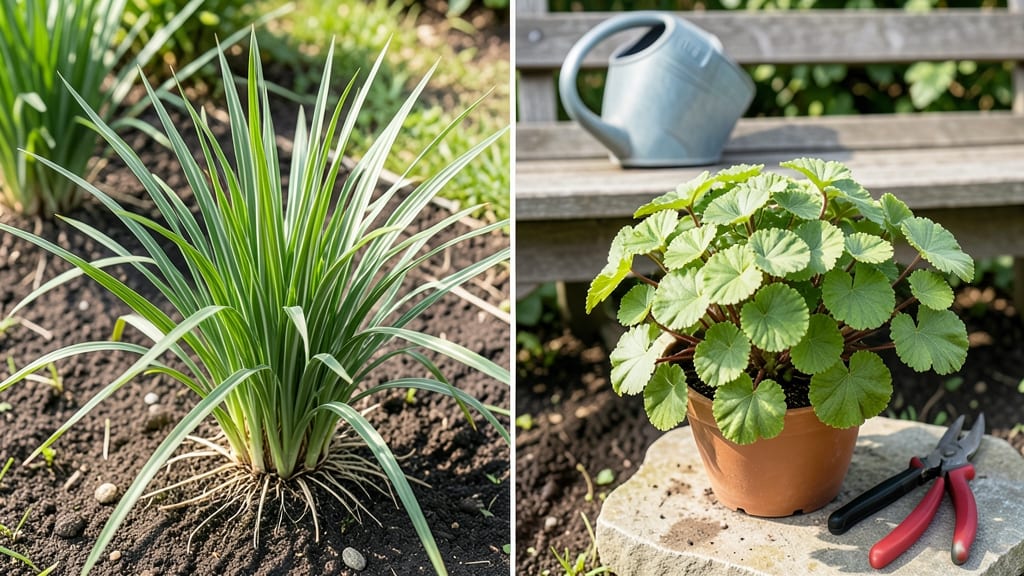
Are lemongrass and citronella grass the same? No—they're distinct plants: lemongrass (Cymbopogon citratus) features a bright citrusy aroma and culinary applications, while citronella (Cymbopogon nardus or C. winterianus) excels as a mosquito repellent with its stronger herbal scent and concentrated essential oils.
While both belong to the same botanical genus (Cymbopogon), their differences go beyond scent. 🌿 Lemongrass thrives in tropical kitchens worldwide, lending its zesty flavor to soups and teas, whereas citronella is specifically cultivated for its pest-repelling properties.
The key lies in their chemical makeup: lemongrass contains more citral (the citrus compound), while citronella's geraniol content makes it far more effective against mosquitoes. This isn't just academic—if you're growing plants for cooking, you'll want lemongrass; for natural outdoor protection, citronella is your best bet.
What's fascinating is how these differences play out in real-world applications. For example, while you might simmer lemongrass stalks in your favorite curry, citronella's oils are what make those outdoor torches so effective.
The confusion often arises because both plants share similar slender, grass-like appearances, but their purposes couldn't be more distinct. Understanding this helps gardeners and home cooks make smarter choices about which plant to cultivate.
💡 In This Article
- Botanical and Chemical Differences Between Lemongrass and Citronella
- Practical Uses: Cooking, Medicinal, and Pest-Repellent Applications
Botanical and chemical differences between lemongrass and citronella
The key distinction between these plants starts at the molecular level. Lemongrass (Cymbopogon citratus) contains 70-85% citral in its essential oils, which gives it that unmistakable lemony aroma.
Citral is a blend of two compounds: geranial and neral, both responsible for that bright citrus scent you notice when crushing fresh lemongrass stalks.
In contrast, citronella (Cymbopogon nardus or C. winterianus) has only 20-40% citral but is rich in geraniol (25-55%) and citronellol (15-30%), creating its more herbal, camphor-like fragrance. 🌿
These chemical differences explain why lemongrass tastes like a cross between lemon and lime, while citronella smells more like a mix of eucalyptus and mint. The oil extraction process matters too—lemongrass yields 0.3-0.8% essential oil by weight, while citronella produces 0.5-1.5%, making citronella more potent for pest control applications.
Visually, both plants have similar slender, reed-like leaves, but lemongrass grows 3-6 feet tall with a more upright habit, while citronella tends to be 4-8 feet tall with a bushier, more spreading growth pattern.
The botanical families also play a role in their functionality. Lemongrass belongs to the Poaceae family (grasses) and is primarily cultivated for its culinary and aromatic properties, while citronella is specifically bred for its mosquito-repelling capabilities.
The difference in oil composition isn't just about scent—it's about function. Citral in lemongrass is more volatile and evaporates quickly, which is great for cooking aromas but less effective for long-lasting pest control. 🔥
Another fascinating difference lies in their growth requirements. Lemongrass thrives in well-drained soil with partial shade and can tolerate slightly acidic conditions (pH 5.5-6.5), making it perfect for home gardens in warm climates. Citronella, however, prefers full sun and slightly alkaline soil (pH 6.5-7.5), which enhances its oil production.
This explains why you'll often see citronella planted in dedicated mosquito-repellent gardens rather than mixed with edible herbs.
For gardeners, these differences mean you can't substitute one for the other. If you're growing lemongrass for your kitchen, you'll be disappointed with citronella's flavor—it lacks that bright citrus punch.
Conversely, using lemongrass for pest control is ineffective because its oil composition doesn't contain the geraniol and citronellol that mosquitoes find repulsive. The science is clear: these plants may look similar, but their chemical makeup makes them fundamentally different in both form and function. ✨
What's particularly interesting is how these chemical profiles interact with human senses. When you crush lemongrass, the citral compounds immediately release a sharp, refreshing citrus aroma that lingers for minutes.
Citronella, on the other hand, releases a more gradual, earthy scent that persists longer—ideal for outdoor settings where you want sustained protection. This sensory difference is directly tied to their molecular structures and volatility rates. 💫