
Trees
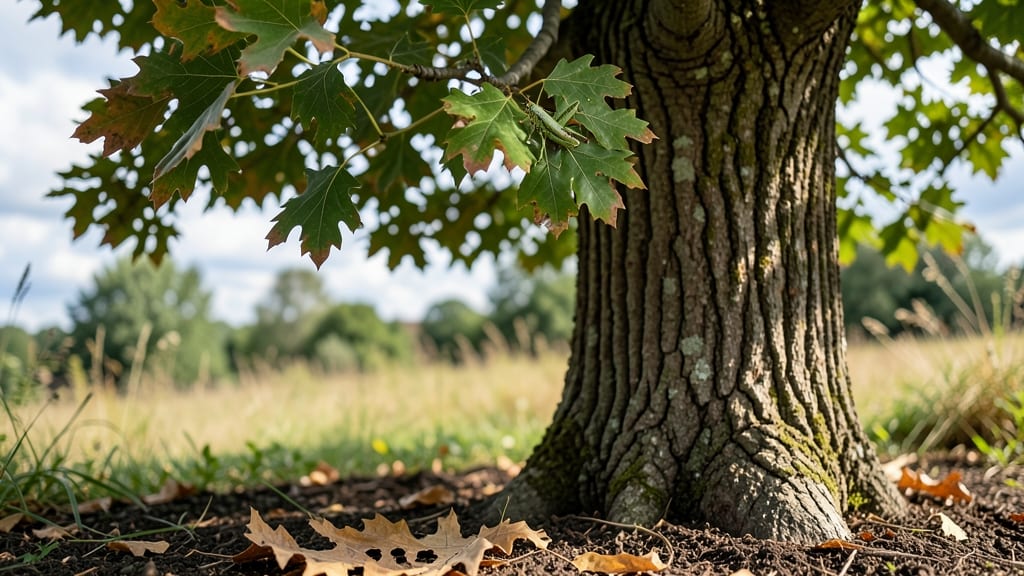
Grasshoppers don't eat trees: their diet focuses on grasses, leaves, and tender plant parts, though they may chew young bark if food is limited. Their mandibles simply can't handle hardwood effectively.
Grasshoppers are specialized plant eaters with mandibles designed for soft vegetation, not woody structures. 🌿 Their diet prioritizes grasses and broadleaf plants because these provide the moisture and nutrients they need to thrive.
While they might gnaw on saplings or thin bark during droughts, trees remain safe because grasshoppers lack the jaw strength to penetrate mature wood. This dietary preference actually benefits gardeners—it's the young shoots of vegetables and flowers that typically suffer, not the trees themselves.
What's fascinating is how their feeding habits shift with seasons. In spring and summer, when fresh growth is abundant, grasshoppers focus on tender leaves. But during dry spells, they become more opportunistic, nibbling on whatever's available—including tree bark.
This behavior explains why some homeowners notice damage on young trees during particularly harsh summers, even though grasshoppers would never target a healthy oak as their primary food source.
💡 In This Article
- Grasshopper Diet: What They Actually Consume in Gardens
- Protecting Trees from Grasshopper Damage in Landscapes
Grasshopper diet: what they actually consume in gardens
Grasshoppers are built for soft, nutrient-rich plant matter—not trees. Their mandibles, powerful for their size, are designed to shear through delicate grass blades and broadleaf foliage, not chew through lignin-rich wood.
Studies show they prefer plants with high moisture content, like corn stalks (which can be stripped down to the stalk) or alfalfa leaves (up to 30% protein by dry weight), because these provide the energy they need for rapid growth and reproduction. 🌱 The key difference is in their jaw mechanics: grasshopper mandibles move in a scissor-like motion, perfect for cutting plant tissue but incapable of the crushing force needed to break down cellulose in mature wood.
Their diet also shifts dramatically with plant availability. During peak growing seasons, grasshoppers consume 10-20 times their body weight daily in fresh vegetation, focusing on grasses (especially cool-season varieties like fescue) and broadleaf plants.
But when drought stress reduces tender growth, they become generalists, nibbling on young tree bark or even dead plant material. This explains why you might spot grasshoppers on tree trunks during dry spells—they're not choosing trees, they're simply scraping at whatever's accessible.
The bark they consume is typically less than 1mm thick, making it more like eating paper than wood.
What makes trees safe from grasshopper damage is their bark's thickness and chemical composition. Mature trees have bark layers that can measure 5mm or more, while grasshopper mandibles are only capable of exerting 0.5-1.5 Newtons of force—enough to chew through thin bark but not enough to penetrate deeper.
The lignin and suberin in tree bark also contain natural repellents that deter grasshoppers, unlike the soft, palatable leaves they target. This is why entomologists classify grasshoppers as "folivores" (leaf-eaters) rather than bark or wood specialists.
Interestingly, their feeding patterns create a feedback loop in ecosystems. When grasshoppers overconsume grasses, they stimulate new growth by removing old leaves, which can actually benefit some tree species by reducing competition for sunlight and nutrients.
However, this benefit disappears when they target ornamental plants or crops—where their appetite becomes a nuisance. The 1930s Dust Bowl saw grasshopper swarms devour entire wheat fields, but even then, they avoided woody plants, focusing instead on the vulnerable crops that sustained human populations.
For gardeners, understanding this preference is crucial. Grasshoppers won't strip a tree bare, but they will skeletonize your rose bushes or devour your vegetable garden if left unchecked. Their mandibles can remove entire leaves in under 30 seconds, leaving behind a lace-like pattern that's unmistakable.
This is why entomologists recommend protecting high-value plants with row covers or neem oil sprays—while trees remain safe, the plants grasshoppers actually prefer will suffer without intervention.