
Mower
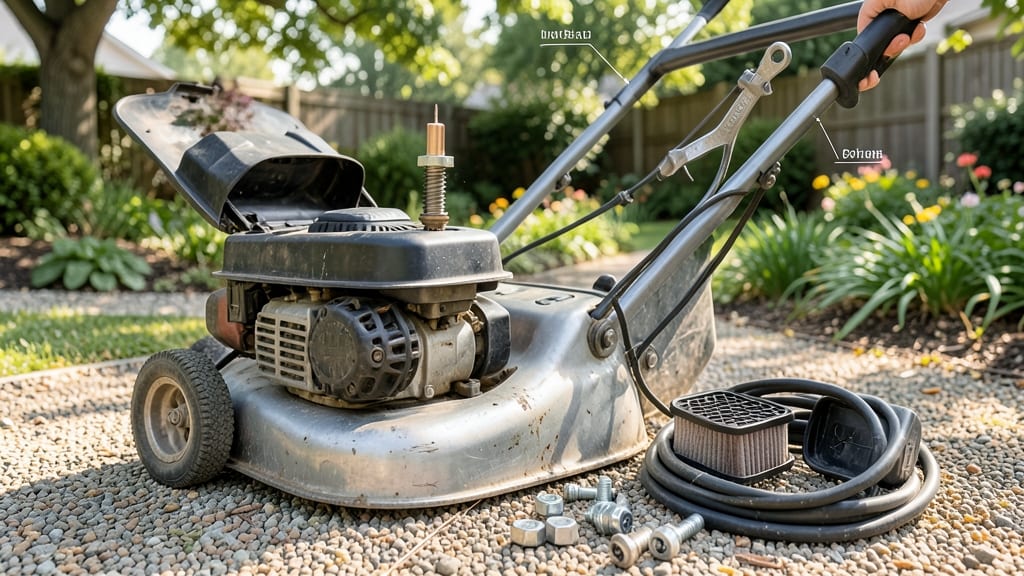
To find the spark plug on a lawn mower, look under the black or white plastic cover on the engine’s side, near where the air filter or flywheel is located. Many models also have a rubber cap or metal housing marked with a plug symbol.
Finding the spark plug is easier than you might think—most lawn mowers follow a similar pattern. 🔥 The plastic cover is usually attached with screws or clips, so you may need a screwdriver or trim tool to remove it safely.
I always recommend disconnecting the spark plug wire first to prevent accidental engine starts, especially if the mower has been running recently. Different brands might hide it slightly differently, but the air filter housing remains your best visual landmark.
Once you locate the plug, check for signs of wear like oil fouling or electrode gaps that are too wide. These can signal it's time for a replacement. Pro tip: Keep a small flashlight handy—some plugs are tucked in tight spots where visibility is limited.
Always let the engine cool completely before handling the plug to avoid burns or damage to the threads.
💡 In This Article
- Lawn Mower Spark Plug Locations by Engine Type
- Safety Tips for Accessing Lawn Mower Spark Plugs
Lawn mower spark plug locations by engine type
Lawn mower spark plugs are strategically placed based on engine design and brand specifications. For Briggs & Stratton engines—the most common in consumer mowers—the spark plug is usually found on the engine's side, tucked under a black plastic cover near the air filter housing.
This cover often has a raised plug symbol or a small rubber boot to protect the plug. On Honda engines, you'll typically find it on the engine's top or side, often under a white or gray plastic cap with a distinct label.
The placement varies slightly by engine orientation: side-valve engines (common in older models) often have the plug on the engine's side near the flywheel, while overhead-valve engines (like those in Honda models) may position it closer to the top.
Kawasaki engines, for example, sometimes hide the plug under a metal cover near the carburetor, requiring a 13mm socket for removal. Always check your owner's manual for brand-specific details, as some manufacturers use unique designs.
Visual cues are your best friend here. Look for a rubber boot (the plug wire connector) or a metal housing with a threaded plug. The boot is typically black or gray and snaps onto the plug's ceramic insulator.
If you're unsure, trace the spark plug wire backward—it always leads to the plug. Pro tip: Some mowers have the plug near the recoil starter, making it easier to spot when the engine is tilted.
Engine size also affects placement. Smaller 40cc-125cc engines (common in push mowers) usually have the plug on the side, while larger 160cc-200cc engines (found in riding mowers) may position it near the top for easier access.
The flywheel is another key landmark—the plug is often within 3-6 inches of it. If your mower has a belt-driven deck, the plug might be on the opposite side of the engine for balance.
Here’s a quick breakdown by brand:
- Briggs & Stratton: Side of engine, under black plastic cover near air filter
- Honda: Top or side, under white/gray cap near carburetor
- Kawasaki: Side or top, often under metal cover near flywheel
- Toro/MTD: Side of engine, near recoil starter or air filter
Always prioritize safety: disconnect the spark plug wire before handling the plug to avoid accidental starts. If the plug is hot to the touch, wait 30-60 minutes for the engine to cool. 🔥
Understanding these variations saves time and frustration. Whether you're replacing a fouled plug or performing routine maintenance, knowing where to look first makes the job smoother. For stubborn covers, a trim tool or flathead screwdriver can help pry them off without damage.