
Fertilization
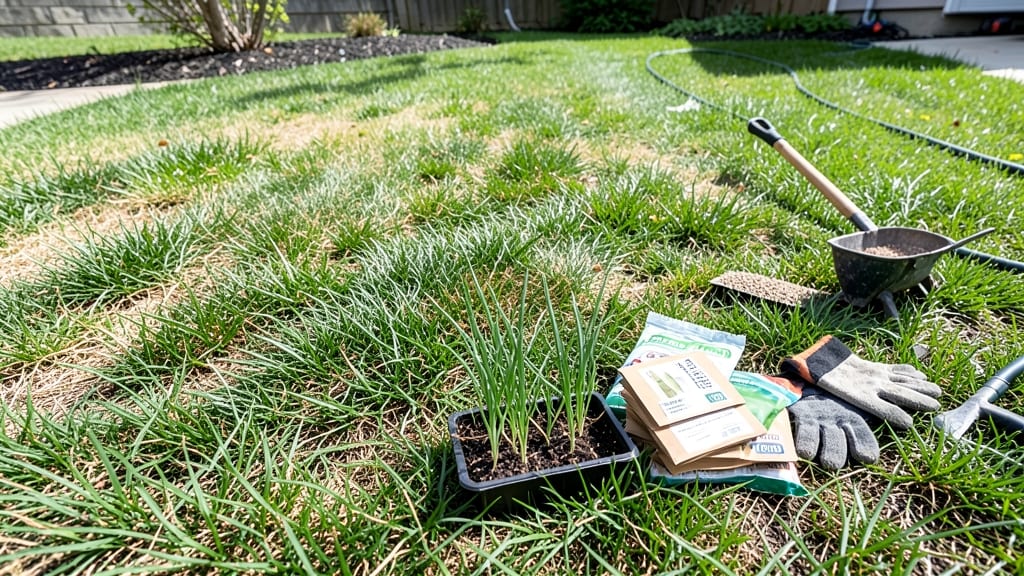
To seed and fertilize lawns in spring, timing depends on grass type and climate: cool-season grasses (like fescue or ryegrass) should be seeded in early spring (March–April) and fertilized 4–6 weeks later, while warm-season grasses (like Bermuda or Zoysia) need seeding in late spring (May–June) and fertilized after germination. Northern regions may delay seeding until soil warms to 50°F+.
Your lawn's success starts with understanding how your grass type and local climate work together. Cool-season grasses thrive when soil temperatures hover between 40–55°F, which is why early spring seeding works best in most northern regions.
Meanwhile, warm-season varieties like Bermuda need that 65°F+ soil warmth to germinate properly, which is why late spring timing is ideal. 🌱 I always check soil temps with a simple probe—it's the best way to avoid guessing.
What's interesting is how regional microclimates can shift these windows by weeks, so knowing your USDA hardiness zone helps fine-tune your schedule.
Once you've got the timing right, the next critical step is soil preparation. Aerating compacted soil before seeding creates the perfect environment for roots to establish, while a simple pH test can reveal whether your lawn needs lime or sulfur.
For fertilization, I recommend using a slow-release formula in spring—it provides steady nutrients without burning tender new growth. The key is patience: waiting 4–6 weeks after seeding before fertilizing gives those young roots time to strengthen first.
💡 In This Article
- Optimal Spring Seeding and Fertilizing Timing by Grass Type
- Step-by-Step Spring Lawn Care Schedule for Healthy Growth
Optimal spring seeding and fertilizing timing by grass type
The science behind spring lawn care revolves around soil temperatures and grass growth cycles. Cool-season grasses like Kentucky bluegrass or tall fescue become active when soil temperatures reach 40-55°F, which typically happens in March or April in most northern climates.
This is why early spring seeding works—those grasses germinate quickly in cooler conditions. Warm-season grasses, however, need significantly warmer soil (65°F+) to activate their growth hormones, which is why you'll see Bermuda or Zoysia seeded in late spring (May-June) when temperatures consistently stay above 70°F.
Here's how climate zones shift these timelines: In USDA Zone 5 (northern regions), cool-season seeding might start as early as late March, while in Zone 8 (southern regions), you might delay until early April to avoid late frosts.
For warm-season grasses, Zone 7 gardeners often seed in early May, while Zone 10 gardeners might wait until June. I've noticed that coastal areas can be 2-3 weeks earlier than inland regions at the same latitude due to ocean temperature moderation—this is why checking local weather patterns is crucial.
The fertilization window comes after germination because young grass needs time to establish roots before handling nitrogen. For cool-season grasses, this means waiting 4-6 weeks after seeding before applying a 10-0-10 or 16-4-8 fertilizer.
Warm-season grasses should get their first feeding only after you see 2-3 inches of growth, typically 6-8 weeks post-seeding. The key difference is that warm-season grasses need phosphorus-heavy starters (like 5-10-10) to encourage root development before switching to nitrogen-focused fertilizers.
What most people overlook is how rainfall patterns affect these timelines. In drought-prone areas, you might need to adjust seeding dates to coincide with natural spring moisture windows.
For example, in the Pacific Northwest, we often wait for the first consistent 2-inch rainfall before seeding, even if soil temps are ideal. This prevents seed desiccation during germination. In humid southern climates, you might need to seed earlier to avoid fungal pressure from prolonged moisture.
Here's a quick reference for soil temperature thresholds:
- Cool-season grasses: Seed when soil is 40-55°F (March-April in most regions)
- Warm-season grasses: Seed when soil is 65°F+ (May-June in most regions)
- Fertilization window: Always wait until 4-6 weeks post-seeding for cool-season, 6-8 weeks for warm-season
Pro tip: Use a soil thermometer to verify temperatures—it's the most accurate way to time your seeding. I keep mine in my gardening toolbox and check it daily during spring transition periods.
The 50°F mark is your magic number for cool-season grasses, while 65°F is the threshold for warm-season varieties to break dormancy and germinate properly. 🌱