
Lawn
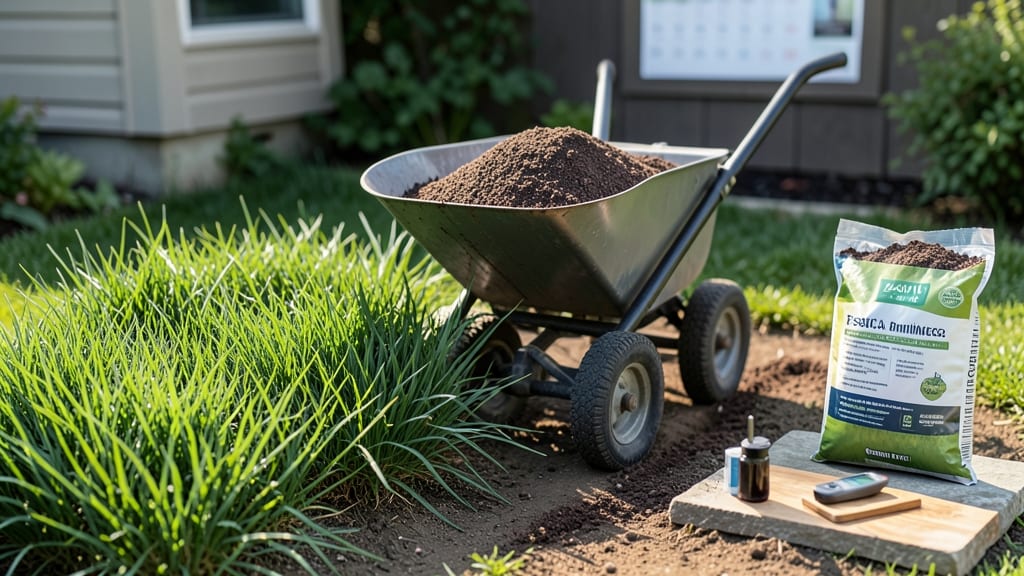
Fertilizing your lawn at the right times boosts growth, strengthens roots, and keeps weeds at bay—but get the timing wrong, and you’ll waste money or even harm your grass.
Picture this: You’ve just spent $50 on fertilizer, spread it carefully, and watered it in—only for brown patches to appear a week later. That’s not just a setback; it’s a sign you missed the ideal window for your grass type.
Cool-season grasses like Kentucky bluegrass crave spring and fall feedings, while warm-season varieties like Bermuda grass thrive with summer applications. Without the right schedule, you’re guessing—and guesswork rarely wins with lawn care.
Here’s the game-changer: a seasonal fertilization plan tailored to your grass type, climate zone, and soil health.
Whether you’re in the 6a zone or further south, I’ll walk you through the best months to feed your lawn, how to read your grass’s hunger signals, and the three biggest mistakes that turn fertilizer into a liability.
No more wasted bags or mystery brown spots—just a lush, resilient lawn that stays green year-round.
Ready to transform your lawn care routine? Start with a simple soil test, then follow the step-by-step schedule that matches your grass type. By the end, you’ll know exactly when to fertilize, how much to use, and why skipping winter feedings saves your lawn from winter burn.
Let’s get your grass growing smarter, not harder.
Best fertilization schedule by grass type: cool-season vs warm-season timing
Fertilizing your lawn at the right time ensures strong roots, vibrant color, and weed resistance. But the best months depend on whether you have cool-season or warm-season grass.
Cool-season grasses like Kentucky bluegrass and fescue thrive in spring and fall, while warm-season types such as Bermuda and Zoysia need summer feeding. Let’s break down the science-backed schedule so you don’t waste fertilizer—or harm your lawn.
Soil temperature is the key trigger for fertilization timing. Cool-season grasses grow best when soil temps are between 50°F and 75°F, while warm-season grasses prefer 75°F to 95°F.
In northern climates, this means fertilizing in early spring and fall, while southern regions focus on late spring through summer. Always check soil temps with a soil thermometer to avoid over-fertilizing during dormancy.
Here’s a quick comparison to guide your schedule based on your grass type and climate zone:
For cool-season grasses, the first fertilization should happen in early spring (March or April) as soon as the soil warms above 50°F. This kickstarts new growth after winter dormancy.
A second application in late summer (August or September) strengthens roots before frost. In northern states, avoid fertilizing after October 1st to prevent winter burn.
Warm-season grasses like Bermuda and Zoysia need a different approach. Start feeding in late spring (May) when soil temps hit 75°F and continue through summer. A light application in early fall (September) can help them transition into dormancy.
In southern climates, you can fertilize as late as October if winters are mild.
Regardless of grass type, avoid fertilizing when rain is forecasted or during extreme heat. Always water your lawn 24–48 hours after applying fertilizer to help nutrients absorb into the soil. Over-fertilizing can lead to brown patches, burnt grass, or even water pollution from runoff.
Pro tip: Use a slow-release fertilizer in spring for cool-season grasses to feed roots steadily. For warm-season types, a high-nitrogen fertilizer in summer promotes thick, green growth. Always follow the label instructions for application rates to avoid overdoing it.
If you’re unsure about your grass type, take a soil sample and send it to your local extension office for a pH and nutrient test. This ensures you’re using the right fertilizer with the correct NPK ratio (e.g., 30-0-4 for warm-season, 24-0-6 for cool-season).
By aligning your fertilization schedule with your grass type and climate, you’ll save time, money, and keep your lawn looking its best year-round. Start with the right timing, and your grass will reward you with dense growth, fewer weeds, and resilience against pests and drought. 🌱
Signs your lawn needs fertilizer: how to diagnose nutrient deficiencies before applying
Your lawn speaks volumes about its health through visual cues and physical responses. Before reaching for fertilizer, learn to read these signals—yellow patches, thin spots, or slow recovery after mowing—all scream for nutrient attention.
I’ve seen lawns with nitrogen deficiency turn a sickly yellow while others with potassium shortage develop weak stems that snap under foot traffic.
Start with a simple soil test kit ($15–$25 at garden centers) to check pH levels and nutrient balance. Most grasses thrive in pH 6.0–7.0, but if your soil tests acidic (pH 5.5 or lower) or alkaline (pH 7.5+), you’ll need to adjust before fertilizing.
For example, my Kentucky bluegrass lawn needed lime to raise its pH from 5.2 to 6.5 before fertilizer would work.
Here’s the key-takeaway to diagnosing your lawn’s needs:
When Should You Fertilize Your Lawn?
🌱 Timing Rule: Fertilize when grass shows active growth (spring/fall for cool-season grasses, late spring/summer for warm-season).
✅ Cool-Season Grasses: Apply in early spring (March–April) and fall (September–October).
✅ Warm-Season Grasses: Fertilize in late spring (May–June) and early summer (July).
⚠️ Warning: Avoid fertilizing in drought or extreme heat—it burns roots.
📅 Pro Tip: Test soil before fertilizing—overdoing it wastes money and harms grass.
A nitrogen deficiency often appears as pale yellow grass that feels soft and spongy when you walk on it.
This is your lawn’s way of saying, “Feed me!” For phosphorus shortages, look for purplish stems or slow root growth, while potassium deficiency shows as brown leaf tips or weak stems.
I once had a Zoysia lawn with brown tips—turns out, it needed a low-nitrogen, high-potassium fertilizer to recover.
Don’t fertilize just because it’s “fertilizing season”. Instead, observe your lawn’s growth patterns. If grass grows 1 inch in 5–7 days (a sign of active growth), it’s ready for nutrients.
But if growth stalls or the lawn looks dull and patchy, hold off—your grass might be stressed by weather or dormant. For example, my Bermuda grass goes dormant in winter, so I skip fertilizer until soil temps hit 65°F+ in spring.
Adjust your fertilization frequency based on grass health, not a calendar. A lush, green lawn may only need 2–3 feedings per year, while a struggling lawn might benefit from monthly light applications during the growing season.
Always water deeply after fertilizing to help nutrients reach roots—½ inch of water within 24 hours is ideal. My fescue lawn thrives with 4 feedings/year, but I cut back to 2 once it stabilized.
Listen to your lawn—it’s already telling you what it needs. Combine visual checks, soil tests, and growth observations to fertilize smartly, not blindly. A well-timed feeding can transform a struggling lawn into a vibrant carpet in just weeks. 🌿