
Lawn
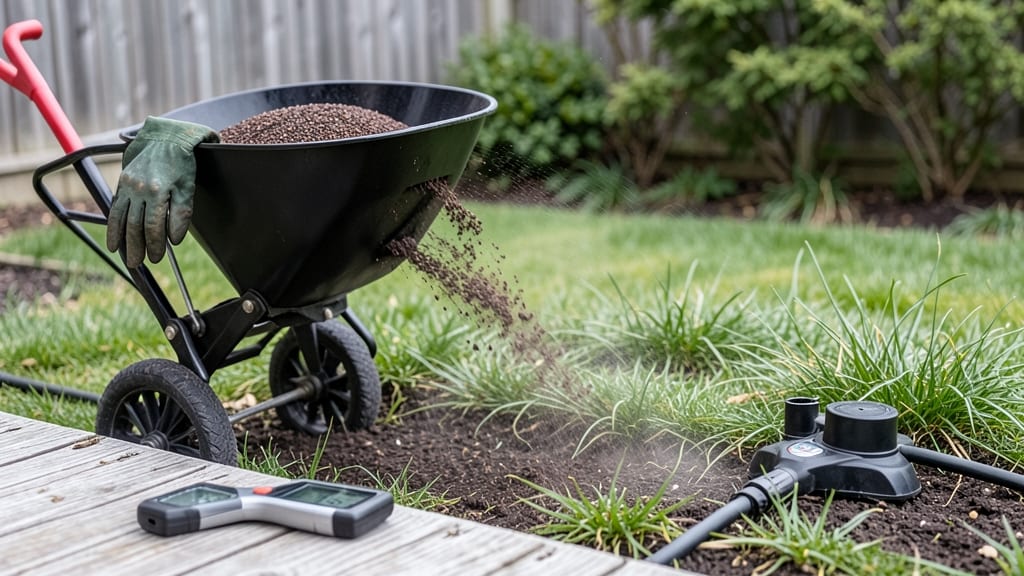
You should fertilize your lawn in the spring when the grass breaks dormancy and starts actively growing—typically 4-6 weeks after your last frost for the best root development.
But here’s the catch: too early, and you’re wasting fertilizer on dormant soil. Too late, and you miss the critical window for strong root growth before summer heat sets in. The exact timing depends on your climate zone, grass type, and even last winter’s snow cover.
Most homeowners in Zone 6a (like my yard) should aim for early to mid-April, but cooler regions may need to wait until May. I’ll walk you through the science behind the schedule—plus how to tell if your 🌱 lawn grass is ready before you even check the calendar.
Skip the guesswork with soil tests, fertilizer types, and a zone-by-zone breakdown so you can feed your lawn at the perfect moment—without burning it or breaking the bank.

Best spring fertilization timeline by US climate zones
Timing your spring lawn fertilization is everything—apply too early, and you waste nutrients; too late, and your grass misses critical growth spurts. The USDA climate zones 3 through 9 have wildly different spring windows, with cool northern zones needing early feeding and warmer southern zones waiting until later.
Even within zones, microclimates (like urban heat islands) can shift your schedule by 2-4 weeks. Let’s break down the exact windows for your region.
Most gardeners focus on early spring fertilization (March-April) to jumpstart root growth after winter dormancy. But in Zone 9, where grass stays semi-dormant until February, late winter is your sweet spot.
Meanwhile, Zone 3 lawns often need a pre-emergent fertilizer in late April to prevent weeds before grass greens up. These differences aren’t just about temperature—they’re tied to soil thaw rates and grass type (cool-season vs. warm-season).
Pro Tip: Always check for soil temperatures (use a soil thermometer) before fertilizing. Grass roots need soil temps above 50°F (10°C) to absorb nutrients efficiently. In Zone 5, this might mean waiting until mid-April, while Zone 7 can start as early as late February.
Here’s your zone-by-zone fertilization timeline, including early vs. late spring windows and key microclimate adjustments:
Notice how Zone 9 starts in January? That’s because warm-season grasses like St. Augustine wake up early, but you’ll want to avoid fertilizing in peak summer heat (above 90°F), as it burns roots.
Meanwhile, cool-season grasses in Zones 3-4 need that late April timing to sync with soil warming and prevent fungal diseases from excess moisture.
For transition zones (6-7), split your feeding into two phases: a light nitrogen boost in March for early root growth, followed by a heavier feed in late May as temperatures stabilize.
This two-step approach mimics natural growth cycles and prevents fertilizer burn during rapid temperature swings. Think of it like layered mulching—small, strategic doses work better than one big application.
One common mistake? Fertilizing after first mowing. Wait until your grass has reached 3-4 inches tall before applying nutrients—this ensures roots are established enough to absorb fertilizer efficiently. In Zone 5, that might mean holding off until late April, even if soil temps hit 50°F earlier.
Patience here pays off with 30% stronger root systems by summer.
Microclimates can shift your schedule dramatically. For example, a south-facing lawn in Zone 6 might need fertilizing 2 weeks earlier than a north-facing one due to warmer soil temps.
Similarly, coastal areas in Zone 8 can start as early as February thanks to milder winters, while inland desert zones might delay until April to avoid evaporative loss. Always scout your yard for shady spots or compacted soil, which may need 1-2 weeks of adjustment.
Finally, pair your fertilization with aeration (2-4 weeks before or after feeding) to let nutrients reach deep roots. In Zone 7**, I aerate in early April and fertilize 3 weeks later—this combo gives my Kentucky Bluegrass a 20% thicker stand by Memorial Day.
The key is consistency: stick to your zone’s schedule, and your lawn will thank you with vibrant green color all season.
🌱
Signs your lawn needs fertilizer before the ideal window
Your lawn speaks volumes before the first signs of spring growth—if you know what to listen for. Yellowing patches that persist after winter or thin, patchy spots where weeds have taken over are clear signals your grass is nutrient-starved.
These visual cues often appear 4-6 weeks before the ideal fertilization window, especially in cool-season grasses like Kentucky bluegrass or fescue.
Another red flag is slow spring green-up. If your neighbors' lawns are vibrant by mid-March but yours still looks dormant or grayish-brown, your grass may need a jumpstart.
This often happens in northern climates (zones 3-5) where cold soils delay nutrient uptake. Even mild winters can leave grass depleted if it wasn't properly fed in fall.
Don't ignore soil texture changes either. Compacted soil that feels hard when pressed or has a clay-like consistency can block root access to nutrients.
A simple soil test (available at garden centers for ~$15) will reveal if your lawn's pH is off (ideal: 6.0-7.0) or lacking essential nutrients like nitrogen or potassium.
🌱 When Should You Fertilize Your Lawn in Spring?
March-April
February-March
Wait 2-3 weeks post-frost
60°F+ at 4" depth
"Fertilize when grass is actively growing but before weeds take over—typically 4-6 weeks before peak green-up."
If your lawn suffered drought stress last summer, it may need early feeding to recover. Look for brown, brittle blades that don't bounce back after watering—this indicates root damage. In these cases, apply a light nitrogen boost (10-0-10 ratio) 2-3 weeks before the ideal window to stimulate regrowth.
For frost-damaged lawns, wait until the soil warms to 50°F+ before fertilizing. Over-fertilizing cold soil can burn roots or encourage fungal growth. Instead, focus on aeration and overseeding first, then fertilize when new growth appears (usually 2-3 weeks post-frost).
Remember: Weeds love weak lawns. If you're seeing more dandelions or clover than grass, your lawn is signaling it needs nutrients now. Address these signs with a balanced fertilizer (20-0-5 ratio) and proper watering to restore your lawn's health before the ideal spring window closes.