
Lawn
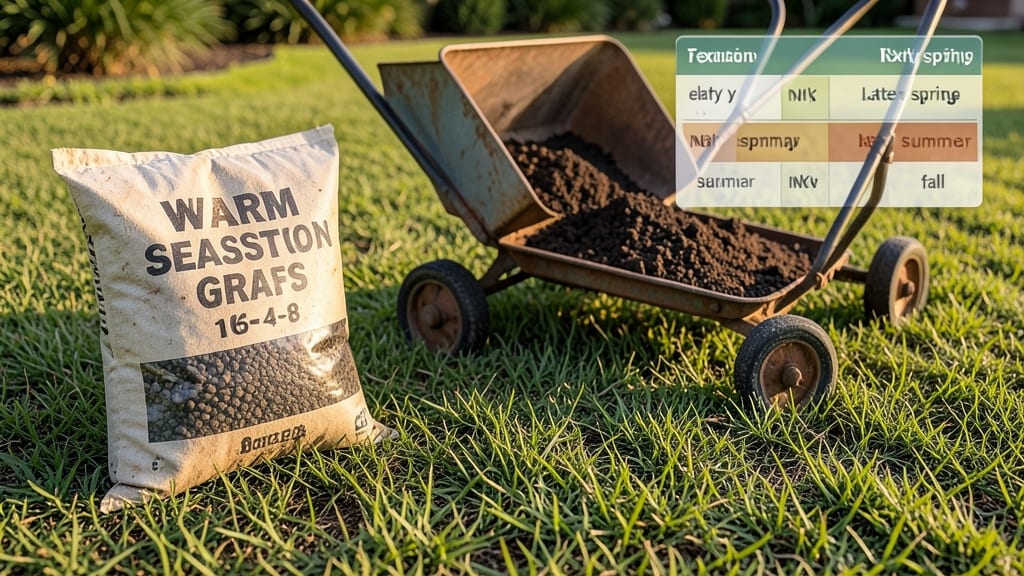
To fertilize your lawn in Texas, time it by grass type: cool-season grasses like ryegrass need feeding in early spring (February–March) and fall (September–October), while warm-season varieties such as Bermuda grass respond best to fertilization in late spring (April–May) and early summer (June–July). Local rainfall and soil conditions can shift these windows slightly.
Texas' diverse climate zones—from the cooler North to the hotter South—create distinct windows for optimal fertilization. 🌱 Cool-season grasses activate growth in spring and fall when temperatures are mild, while warm-season grasses peak during summer's heat.
For example, St. Augustine thrives with summer feeding, but Bermuda grass may need an early spring boost to outpace weeds. Always test your soil first—Texas' alkaline soils often need phosphorus adjustments, and over-fertilizing can waste money while harming local waterways.
Pro tip: Pair fertilization with proper mowing heights—never cut more than ⅓ of the grass blade at once—and water deeply after applying to help nutrients reach the roots. In drought-prone areas like West Texas, reduce feeding frequency to conserve moisture.
💡 In This Article
- Texas Climate Zones and Fertilizer Timing
- Step-by-Step Texas Lawn Fertilization Guide
Texas climate zones and fertilizer timing
Texas spans USDA hardiness zones 7 through 10, creating dramatic differences in temperature and rainfall that directly impact when and how your lawn absorbs nutrients.
In the cooler North (zones 7-8), like Dallas or Fort Worth, cool-season grasses such as tall fescue and ryegrass enter their active growth phase when daytime temperatures consistently stay above 50°F—typically by late February.
This is why early spring fertilization (February–March) gives them the nitrogen boost they need to green up before summer heat sets in.
The Central region (zones 8-9), including Austin and San Antonio, experiences a transition zone where both cool-season and warm-season grasses compete. Here, warm-season grasses like Zoysia begin their growth cycle when soil temperatures reach 60°F—usually by mid-April.
Fertilizing in late spring (April–May) aligns with this natural growth surge, while fall applications (September–October) support cool-season grasses preparing for dormancy. Rainfall patterns also play a role: Central Texas' variable precipitation means adjusting fertilizer schedules to avoid runoff during heavy rains.
Southern Texas (zones 9-10), from Houston to the Rio Grande Valley, favors warm-season grasses like St. Augustine and Bermuda that thrive in summer's heat. These grasses need fertilization when they're actively growing—typically late spring (April–May) for early growth and early summer (June–July) for peak vigor.
The key is avoiding fertilization when temperatures exceed 90°F, as this stresses the grass and can burn the roots. In humid South Texas, fungal diseases are a bigger concern than in drier regions, so choose slow-release fertilizers to prevent overfeeding.
What most homeowners miss is how soil temperature—not air temperature—triggers nutrient uptake. Use a soil thermometer to verify when to fertilize: cool-season grasses need soil temps between 50-65°F, while warm-season grasses thrive at 65-85°F.
In North Texas, this often means waiting until March to fertilize Bermuda grass, even if air temps feel spring-like earlier. 🌡️ Over-fertilizing in cool weather wastes nutrients and can lead to thatch buildup, while under-fertilizing in summer heat leaves lawns vulnerable to weeds.
Consider these regional adjustments for common Texas grasses:
- Bermuda grass: Fertilize in April (late spring) and June (early summer)—avoid fall feeding as it encourages late-season growth vulnerable to winter kill
- St. Augustine: Feed in May and July with high potassium to boost disease resistance in humid climates
- Tall fescue (cool-season): Apply in February and September with slow-release nitrogen to prevent winter burn
Pro tip: Pair fertilization with proper watering—apply 1 inch of water after feeding to help nutrients penetrate the soil. In drought-prone areas like West Texas, reduce feeding frequency to conserve moisture and prevent salt buildup from fertilizers.