
Pests
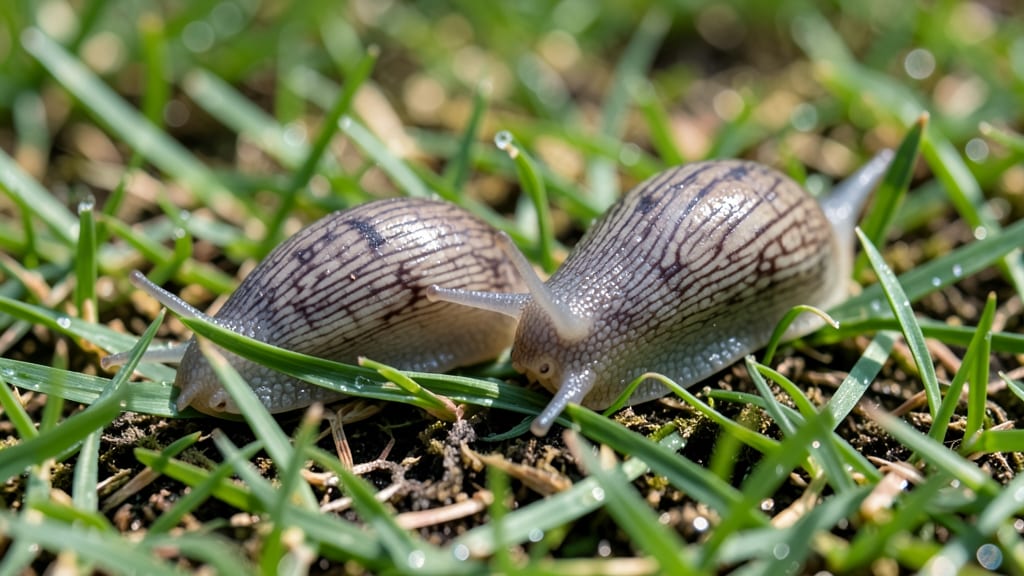
Slugs are bad for your lawn because they devour grass blades, leaving behind irregular brown patches and weakening turf health, especially during damp conditions or at night when they feed most actively.
These slimy pests aren't just unsightly—they act like tiny lawn mowers, slicing through grass blades with their razor-sharp tongues called radulas. 🌱 The damage worsens in shaded or moist areas where grass struggles to recover, creating those telltale slime trails and chewed patches that spread quickly.
Unlike snails, slugs lack protective shells, making them more aggressive feeders that can completely defoliate young seedlings overnight during humid evenings.
What makes them particularly destructive is their feeding pattern: they don't just nibble—they create jagged edges on blades, which weakens the plant's ability to photosynthesize. This leads to yellowing, stunted growth, and eventually bare spots that invite weeds.
The worst part? Their activity peaks exactly when your lawn needs the most care—spring and fall—when grass is already vulnerable from watering and mowing.
💡 In This Article
- How Slugs Destroy Lawn Grass and Other Plants
- 3 Natural Ways to Control Slugs Without Harming Your Lawn
How slugs destroy lawn grass and other plants
Slugs attack lawns using their specialized feeding apparatus—a file-like tongue called a radula lined with thousands of tiny, chitinous teeth.
These teeth act like a serrated knife, slicing through grass blades with such precision that they create clean, irregular cuts rather than the ragged tears caused by other pests. 🌱 The damage isn't just cosmetic; each bite disrupts the plant's vascular system, preventing water and nutrient flow to that section of the blade.
This creates brown, dead patches that spread rapidly in moist conditions.
These pests show a clear preference for tender, young grass—especially cool-season varieties like Kentucky bluegrass and fescue—which are already vulnerable during their growth phases.
Slugs also target broadleaf plants like hostas and lettuce, leaving behind telltale silvery slime trails that glow under UV light (a trick gardeners use to spot infestations at night).
Their activity peaks between 10 PM and 4 AM when humidity exceeds 80%, creating ideal conditions for their gelatinous bodies to thrive.
The real damage occurs when slugs feed on grass crowns—the thickened base where roots and shoots meet. Unlike snails, which carry protective shells, slugs have no armor, allowing them to press their entire bodies against plants with 5-15 pounds of force per square inch.
This pressure crushes cell walls, effectively suffocating the plant tissue. In severe cases, they can completely denude lawns in just 2-3 nights, leaving only the thatch layer exposed.
What makes slugs particularly insidious is their reproductive cycle. A single slug can lay 50-400 eggs in damp soil, which hatch in 2-4 weeks under ideal conditions. The resulting young slugs (called "sluglets") are just as destructive, creating a compounding effect that turns small problems into full-blown infestations.
Their ability to reproduce so quickly means that by the time you notice the damage, the population may already be in the thousands.
Another critical factor is their moisture dependency. Slugs cannot survive in dry conditions—their bodies lose moisture too quickly. This is why they thrive in lawns with poor drainage, thick thatch layers, or frequent watering.
Even morning dew provides enough hydration for them to become active, which explains why damage often appears overnight. Their preference for shaded areas creates microclimates where moisture lingers longer, making these zones high-risk hotspots for slug activity.
Understanding these mechanics reveals why traditional lawn care practices often fail against slugs. Most pesticides target above-ground pests, but slugs hide in thatch and soil during the day. Their feeding patterns also mean they're most active when you're least likely to notice—after dark.
This stealthy behavior combined with their reproductive speed makes them one of the most persistent lawn pests gardeners face. 💫